
Could VR Transform Stuttering Therapy? Research Insights from John Tetnowski
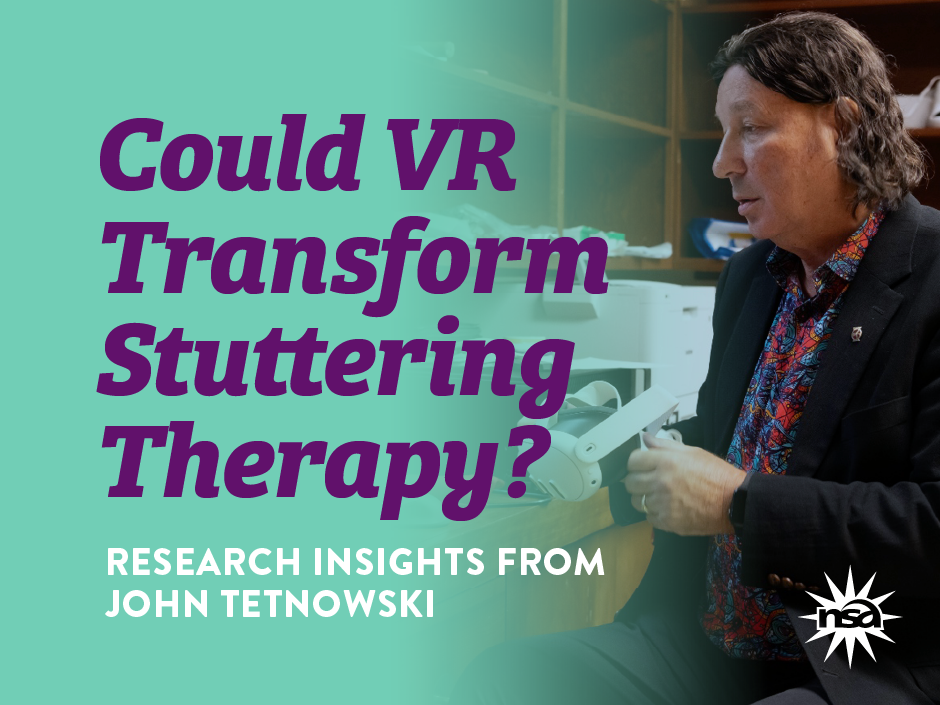
Speech therapy for stuttering has long struggled with one key issue: helping people use the skills and techniques in everyday conversations. Research led by John A. Tetnowski, PhD, CCC, is tackling this challenge using virtual reality (VR), offering a more practical and engaging path forward for stuttering therapy.
“The main goal of this project was to investigate how skills learned in clinical settings can be transferred to real-world settings,” said Dr. Tetnowski. “This problem is common in all stuttering therapies.”
Funded by the National Stuttering Association’s CASE Research Grant in 2022 and ongoing through 2025, this project focuses on adolescents and adults who stutter. Its goal is simple but critical: make therapy more applicable to everyday communication. By prioritizing outcomes, the research moves beyond traditional clinic-based success measures.
The Therapy Room vs Real Life: How VR Bridges the Gap
Traditional methods like role-play often fall short because they don’t fully replicate real-world situations. This creates a disconnect that can limit progress and confidence.
VR introduces immersive environments where people can practice communication in realistic scenarios. Early findings show it helps transfer skills more effectively than traditional methods.
“The gulf between a clinical setting and a real-world setting is quite wide,” said Dr. Tetnowski. “We found that VR is a viable option for promoting transfer and carryover of skills.”
Why VR Works
One of the most surprising outcomes of the research is how quickly adolescents adapt to VR. Not only do they engage with it easily, but they also show increased motivation to practice independently. This shift could be a game-changer for long-term therapy success, especially for younger populations.
“Adolescents not only enjoy this type of intervention, but they will also engage in at-home practice easily and without prompting from parents and therapists,” said Dr. Tetnowski.
Beyond improving outcomes, VR also expands access to care. Individuals in rural or underserved areas can benefit from realistic therapy experiences without needing to travel to specialized clinics. This makes stuttering therapy more inclusive and widely available.
How VR Is Changing the Future of Speech-Language Pathology
The implications of this research extend beyond therapy sessions. VR is also reshaping how future speech-language pathologists are trained, offering immersive experiences that simulate the emotional and practical realities of stuttering. It provides a more accessible and ethical alternative to traditional training exercises.
“Stuttering in a virtual environment can serve as an intermediate step that can give all speech pathology students to experience some of the feelings associated with stuttering,” Dr. Tetnowski said.
His team is already implementing VR in clinical settings while continuing to refine and expand the technology. New simulations are being developed to increase realism and collect more detailed data.
This ongoing work ensures that VR-based therapy will continue to evolve and improve.
What’s Next for Virtual Reality in Speech Therapy?
Looking ahead, the research aims to explore whether VR can support other areas of speech therapy beyond stuttering. If successful, this could open the door to a broader transformation in how communication disorders are treated.
The future of therapy may be more accessible and effective than ever before. But Dr. Tetnowski is thinking of the future by asking just one important question:
“Can VR applications be used in more types of speech therapy, not just stuttering?”
To learn more about the NSA’s CASE Grant, visit WeStutter.org/case-grant.


