
2026 Graduate Student Research Award Recipient: Ladan Khoshbin
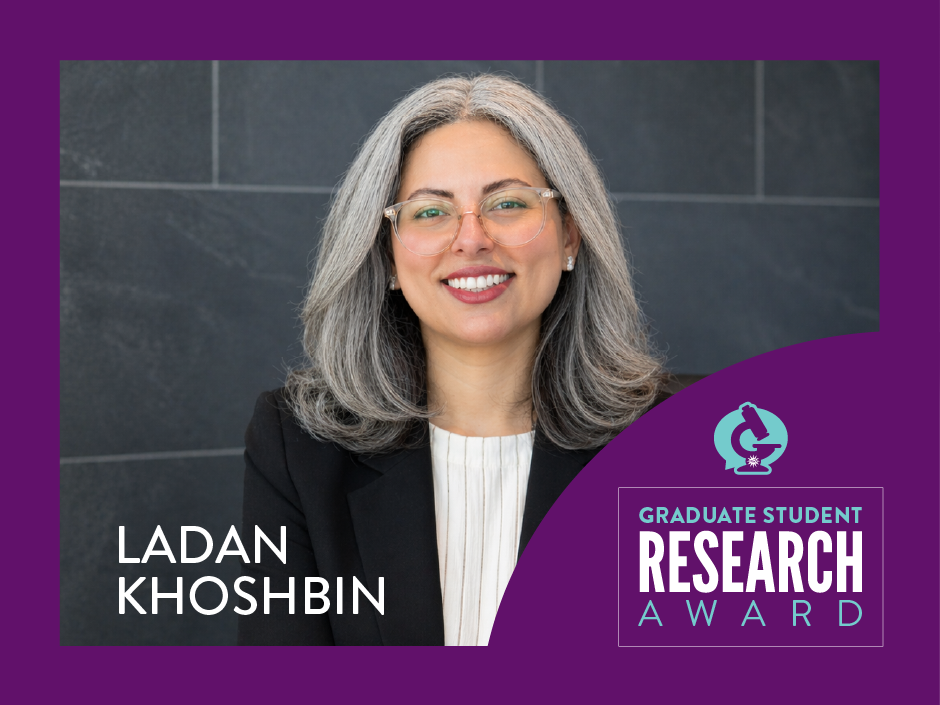
The National Stuttering Association (NSA) is proud to announce Ladan Khoshbin, SLP, as the recipient of the 2026 NSA Graduate Student Research Award (GSRA). Her study, "Self-Disclosure and Psychological Resilience in Adults Who Stutter: A Mixed-Methods Study of Relationships, Influencing Factors, and Lived Experiences," will examine how choosing to disclose stuttering may relate to resilience and why that relationship can differ from person to person.
The GSRA provides up to $5,000 in funding to support graduate students conducting meaningful stuttering research. Formerly known as the NSA Research Fund Award, it has been awarded annually since 2022, thanks to the generosity of the NSA community. The award is presented in loving memory of Diane Games and honors her lasting contributions to speech-language pathology and stuttering research.
"What has always mattered most to me is being impactful in people's lives and I realized research was a way to keep doing that,” Ladan said. “Receiving this award means a great deal to me, and not only because of the funding."
From Clinical Practice in Iran to Doctoral Research
Ladan began her career in speech-language pathology in Iran, where she worked for 12 years as a clinician before considering research. She started as a general SLP, but working with people who stutter quickly became the center of her practice. The progress she saw with clients also raised questions about why certain approaches helped and why others did not.
She founded a private practice and later co-founded Green Speech to expand stuttering awareness and clinician training beyond her own clients. Those unanswered clinical questions eventually brought her to Binghamton University. Ladan is now a graduate assistant in the Division of Speech-Language Pathology at Decker College of Nursing and Health Sciences and a doctoral candidate in Community Research and Action at the College of Community and Public Affairs. Her research is guided by Dr. Rodney Gabel.
"I started as a general SLP, working across different areas of practice, and in less than a year, I found where I belonged: working with people who stutter,” said Ladan. “I did not choose stuttering because it was easy. I chose it because it was where I was already succeeding and that success left me with a question I carried for years before I had the tools to answer it."
Listening Shaped the Research Question
Early in her clinical work, Ladan noticed that clients who stutter often opened up more and reported greater progress than she expected. One possible reason kept returning to her. She listened well. The work of David Luterman helped her become more deliberate in her listening, a skill she continues to develop and now shapes how she approaches research.
Her interest in disclosure also grew directly from clinical practice. While working with a woman who had a covert stutter, Ladan noticed that the client's openness encouraged other people to share their own vulnerabilities. When later research by Boyle and Gabel reflected the same pattern, disclosure became more than a clinical tool for Ladan. It became a question she wanted to study.
"That pattern, disclosure inviting disclosure, was something I observed directly in practice long before I had research language for it,” Ladan said. “When Boyle and Gabel's work came out, I recognized the same pattern in their findings, and that recognition is what turned disclosure from something I did clinically into a question I wanted to study directly."
Self-Disclosure, Resilience, & the Speaker's Perspective
In Ladan's study, self-disclosure refers to a person who stutters intentionally letting someone else know that they stutter. She will use a mixed-methods design, beginning with a large survey and following it with interviews with a smaller group. The survey will help identify broader patterns, while the interviews will allow participants to describe what disclosure has meant in their own lives.
Much of the existing disclosure research has focused on how listeners respond and how disclosure affects communication. Ladan is examining how disclosure may fit into a person's longer-term response to stigma and adversity. Her study will consider self-stigma, self-esteem, and self-compassion as possible mediators, along with community involvement, gender, and stuttering severity as factors that may influence the relationship between disclosure and resilience.
"Over three years of doctoral work, that same strength, listening, shaped everything I chose to study,” said Ladan. “I gravitated toward resilience and lived experience, did qualitative work so I could keep listening closely and treat people's stories as evidence, and kept reading until I saw the gap clearly: we know a great deal about the listener's perspective on disclosure, but far less about the speaker's own in-depth experience."
Treating Lived Experience as Evidence
The study was designed to balance scale with depth. A broad survey can show relationships across a larger group of adults who stutter, but Ladan did not want numbers to tell the entire story. The interview phase gives participants space to explain how disclosure, stigma, support, and resilience interact in ways that a set of survey responses may not fully capture.
"I wanted the study to be large enough, through the survey, to say something reliable across many adults who stutter, but I did not want numbers to be the whole story,” said Ladan. “The interview phase exists because I believe people's own accounts of their experience carry evidence, not just illustration."
Ladan's own path into qualitative research shaped this choice. Over three years of doctoral work, she gravitated toward resilience and lived experience because qualitative methods allowed her to listen closely and treat people's stories as evidence. By combining quantitative and qualitative methods, the study can preserve both breadth and individual meaning.
Moving Toward More Individualized Support
Ladan hopes the findings will offer a more nuanced understanding of what disclosure can and cannot do. Disclosure is often encouraged as a broadly positive step, but her research recognizes that the experience may depend on a person's self-stigma, self-esteem, self-compassion, community support, and other parts of their life.
That deeper understanding could help clinicians move beyond general advice and have more individualized, evidence-based conversations with clients. It may also give people who stutter better information as they decide whether, when, and why disclosure feels right for them.
"I hope this study gives people who stutter a clearer, more honest picture of what disclosure can and cannot do for them, instead of a blanket message that being open and disclosing is simply good,” Ladan said. “I want them to see disclosure as one possible part of building resilience, one that may work differently depending on their own self-stigma, self-esteem, self-compassion, and the support around them, so they can make that choice for their own reasons."
What the Graduate Student Research Award Means to Ladan
Applications for the Graduate Student Research Award are evaluated for their significance, originality, methodological rigor, feasibility, and relevance to the stuttering community. For Ladan, being selected brought encouragement that went well beyond the financial support.
The recognition affirmed that a research question rooted in attentive clinical practice and the lived experiences of people who stutter belongs in the field. It also strengthened her confidence to keep studying how adults who stutter build resilience in their own words.
“That confirmation has boosted my confidence to keep pursuing this topic and to trust that what I bring to it matters,” said Ladan. “I am genuinely grateful and I am thankful to the National Stuttering Association for supporting research that starts from listening to people's lived experience.”
The NSA is proud to support Ladan and research grounded in the voices of people who stutter. Learn about the GSRA here.


